
Don't join the club
You can keep your quaich, Jimmy!

The drinks industry has all kinds of organisations designed to wrap you up in a comfy blanket of bogus history and camaraderie. For Scotch whisky you have the Keeper of the Quaich, or the Kippers of the Quiche as some wags call it. After a certain time being involved with whisky you might be invited up to Scotland to be sworn in with much tartan, bagpipes and, of course, whisky. If you don’t lose your quaich then you might be asked to be a Master of the Quaich, though there are only 150 of these so you have to be very important to get on. A quaich, for those who don’t know, is a small bowl used for tasting whisky.
Tasting vessels are important in the drinks world: Burgundy has the Confrérie des Chevaliers du Tastevin where members wear floppy hats with silver tastevins around their necks. There’s lots of cod medievalism though the order only dates back to 1934. Armagnac has the Company of Musketeers of Armagnac (Compagnie des Mousquetaires d’Armagnac) and I’m sure there are Mosel hussars and Rioja grenadiers.
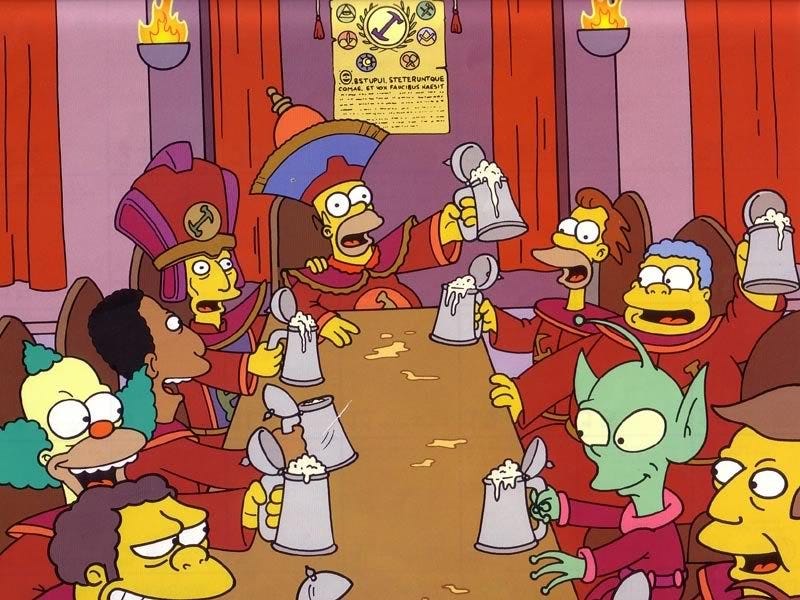
Once you are a member you get to enjoy lots of long elaborate dinners punctuated with speeches and much red-faced singing. A bit like the Stonecutters in the Simpsons. All good clean fun but I think writers should be wary of joining such organisations. This might be my natural fear of joining in or sour grapes because I have never been invited to keep a quaich. But once you have donned the kilt or the floppy hat, it’s difficult to mock, lest you be mocked as well. You have traded away your independence, such as it was, for a slap-up dinner and magnum of premier cru Burgundy.
Journalists should maintain a certain distance from the trade. That isn’t easy. I fully admit that us writers are parasites on the back of the wider drinks business. Without people making wine, whisky, gin and beer, there would be nothing for me to write about. The industry also pays for the few drinks publications out there and pays us in more direct ways as I have written about before. Whether we like it or not, if people aren’t drinking wine that is our problem too. While we can be critical, we have to be careful or we risk sawing off the branch we’re sitting on.
This is true of all hacks involved in the fluffier end of journalism but we have an added layer of difficulty not shared by film reviewers. When, I am flailing around for a well-known film reviewer, Barry Norman? Cosmo Landesman? reviews a new movie, he doesn’t do it in the company of the director or leading lady. They can say what they like. Wine writers, however, will often taste wines with the person who made them. Furthermore they might be tasted over a nice lunch or out in the vineyard on a beautiful day. The conviviality is very difficult to remove from wine.
Jancis Robinson on her recent podcast said, and I’m paraphrasing here, how people were always surprised that someone who could be so nice in person could be so pitiless in print. That’s the mark of a good writer. Graham Greene described it as having a shard of ice in the heart. It’s hard to maintain that shard when you’re wearing a floppy hat, drunk and being embraced by a red-cheeked Frenchman. Wine is by its very nature a convivial business and attracts people who like to have fun. When I first started out, I tried to just taste wine and not get to know people too much so I could write what I want. But over the years I have been sucked into the social world of wine and whisky. It’s impossible to research and write about drink without enjoying some hospitality.
When I embarked on a book about English wine in 2022, I had the advantage of knowing little English wine. I didn’t personally know any of the producers. I often turned up knowing next to nothing about the person to be interviewed. One time I asked to speak to someone who had been dead for years. But this ignorance gave me an advantage because I brought no prejudices good or bad to my meetings. In turn many of the winemakers clearly had no idea who I was so while most people gave me time, I was often treated quite brusquely by people who had clearly better things to do. I was able to approach the subject with a bumptious lack of reverence that I couldn’t do now. Many English winemakers have become friends and I now feel a bit bad for my irreverence towards others. If I wrote the book now, it would be far more accurate, thorough and even-handed. It might also be less fun.
Therefore, I am trying to maintain my distance. My wife often helps keep me honest when I’m raving about some English pinot noir or some such and she’ll ask whether I’d spend my money on it. Looking at the business side of things is a useful antidote to all the bonhomie out in the vineyard. It is important for writers to keep that shard of ice. And if it means forgoing some floppy hats or a quaich or two then that’s a price worth paying.
Am very happy to keep that shard of ice for you.
As someone who certainly will never have a quaich or a floppy hat, I find this an interesting take on not just the groups but on trying to not get to know people to well or allowing that to affect your writing. For me brands (mainly smaller ones) are forged by personalities that show case their passion for their products and ore often than not their category rather than just their own brands so if that adds a positive comment here or there then I am all for it.