
Guns for wine
Was the favourite middle-class wine of the 1980s and '90s the result of a shadowy deal between communist Bulgaria and apartheid South Africa?

Do you remember Bulgarian cabernet sauvignon? It was massive in the 1980s and ‘90s. The big brand was called Domaine Boyar, as I recall. It was a sensation in middle-class households. Dads with names like Colin or Geoff would open it up on Sunday lunch and say “can you believe it, it’s Bulgarian? For me it’s just as good as St Estephe at four times the price.” And it was extraordinarily cheap. Jancis Robinson writes:
“In the 1980s Bulgarian Cabernet Sauvignon at two pounds a bottle was a favourite at British dinner parties, sometimes served from a decanter to avowed claret lovers who were none the wiser.”
At one point Sainsbury’s Bulgarian Cabernet Sauvignon was the bestselling wine in the country. In 1996 Britain imported something like 4.5 million cases of Bulgarian wine. But then it disappeared and could not be found anywhere. Cheapskate middle-class claret lovers were bereft but soon got over it and found that Chilean merlot was much nicer anyway. And nobody really pondered what happened to Bulgarian cabernet.
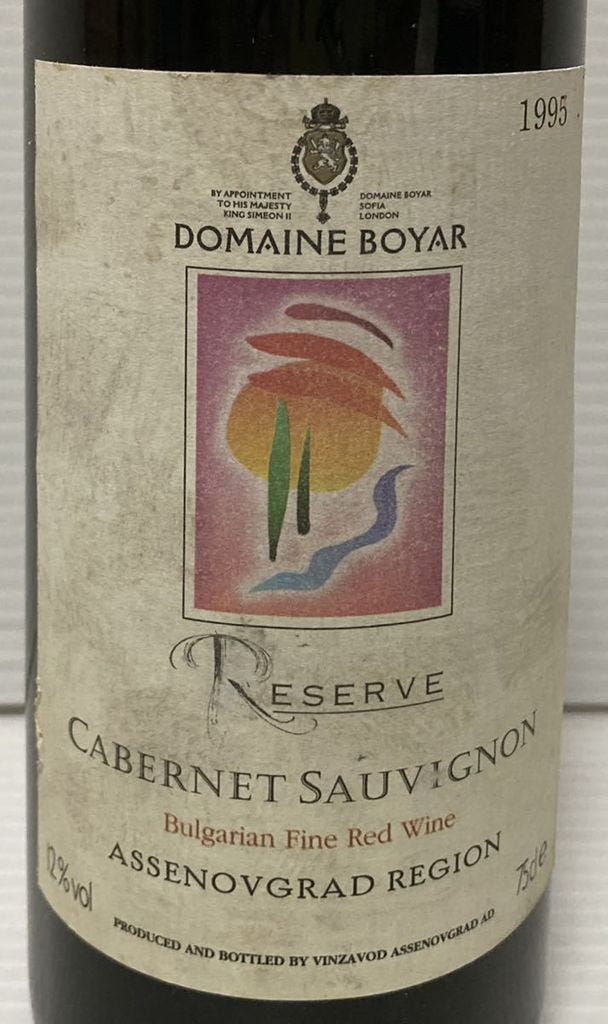
But a few years ago I heard a rumour. Bulgarian cabernet wasn’t Bulgarian at all, it was South African! How could this little country suddenly have been a wine superpower and then no more, seemingly overnight? The answer was that the vast South African industry, then cut off from the outside world because of apartheid, made a deal with the Bulgarians. They would send all their red wine made from cabernet, merlot or whatever, it didn’t really matter, and in return they would get weapons from Bulgaria. It was like Iran-Contra but with wine.
