

Jancis Robinson wrote in her 1997 book, Confessions of a Wine Lover, “it was still widely held that it was impolite at best and improper at worst to criticize any particular wine, producer, or closer to home, importer. The British wine trade was still a fairly cosy little clique.” This goes for wine writing as well. It’s a small world, nobody wants to be too critical.
But recently there has been what looks like flagrant use of AI which is why it’s important to draw people’s attention to it now. In his post looking at wine writers on Substack, Miquel Hudin singled out a couple of offenders. What is particularly worrying is that posts that appear to me to be quite obviously AI-generated get shared and lauded by other writers. Some of whom I respect greatly.
Another AI row has just broken out at this week’s 67 Pall Mall awards. They were launched in 2024 by the wine-orientated chain of private members’ clubs as the most prestigious awards for wine communication - in other words video, audio and words. It was founded by a Master of Wine, Richard Hemming, who is a friend, with well-regarded American writer Elaine Chukan Brown as chair of the judges.
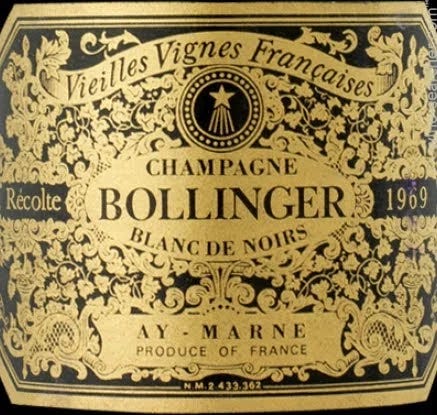
This year’s winner in the shortform writing category was a London-based sommelier called Fikayo Ifaturoti with a piece entitled Collector Logs, No. 4 | The Stradivarius Violin × 1969 Bollinger VVF. She formerly worked at 67 Pall Mall and now works for Moët Hennessy. When I saw her name on the list, I thought how good it was to have a new face as wine writing is a small world and it tends to be the same people over and over again who get nominated.
Then I read her piece and I got a sinking feeling.
There’s the very short sentences and paragraphs. Well, really no paragraphs at all. The use of three: “We’ve scanned it. Measured it. Analysed it.” The ‘it’s not one thing it’s another’ construction: “Not because we lack the recipe. Because we lack the world the recipe came from.” These tics are repeated over and over again. Then there’s the arid impersonal style and multiple lines that promise profundity but ultimately add up to very little. I put it through the AI detection site Pangram which came back with 100% machine generated. I should caveat that this is not infallible but combined with the other tells a pretty strong signal that the writing is at the very least AI-assisted. I sent it to a couple writers I trust who all agreed that something was up. On social media others including Hudin, Andy Neather, Felicity Carter and Alice Feiring have come to the same conclusion that I did.
Ifaturot’s whole Substack is the same. There are just four posts, very few subscribers and only five likes as of last night. It turns out that her writing originally took the form of emails to her clients and she put them up online so that she could enter the awards. I understand the desire to find and champion new voices, God knows we need some new blood in wine writing, but in this case, the judges seem to have switched off their critical faculties. When I saw it, I wrote to the 67 Pall Mall awards with my suspicions, Richard Hemming got back to me and though he couldn’t speak for the judging panel was convinced that the winning piece wasn’t 100% AI-generated. He argues that it’s a spare style of writing that has developed particularly among the younger generation. Elaine Chukan Brown also responded:
“AI detectors and AI writers are developed from the quirks and history of human writing. The hallmarks we tend to rely on to identify AI-generated work exist because real people use them….Relying too heavily on AI detectors and tropes of what AI writing looks like risks erasing the very human element in writing we seek to protect.”
In the end, it is impossible to know for sure but I find it hard to believe that the judging panel, which includes some very experienced writers, could not have suspected something, but perhaps some people still aren’t attuned to the tells of AI writing. I remember at Master of Malt judging the annual Robert Burns poetry competition in 2023. We normally received 100 entries, but that year we got 2,000. You can guess why. Occasionally my fellow judges during shortlist discussions would select the AI stuff for their personal favourites until I pointed out the tells. The big one was that all the ChatGPT-generated poems used the words ‘amber hue.’
Once you start to recognise the malign work of LLMs, it’s hard not to see them everywhere. I read a highly-lauded non-fiction book where huge chunks of it were in this style. In his review of AA Gill’s son’s memoir, Knives and Spoons, in the Daily Telegraph Ed Cumming refers to the “peculiarly frictionless style that has emerged online in recent years.” Several months ago, I was sent an upcoming wine book by an academic which had its facts so wrong that I can only think he must have done all his research using ChatGPT.
Unlike some, I am not totally against AI. I think it’s on the whole bad but since it exists, it can be useful as an advanced spelling and fact checker. Though make sure you don’t take all its suggestions as it can be very very wrong. It’s also useful as a search engine, where Google just brings up adverts, Claude can sometimes find the thing I am looking for. The danger is when you use these things to do your actual writing or all your research. That’s the problem.
What is so galling about the examples above is that they are not press releases or reports, they are meant to be enjoyed. And they appear not to be written by humans. Editors, judges and journalists need to learn to spot AI writing. Otherwise institutions like the 67 Pall Mall awards will lose all credibility.
Update 12 September - I have contacted Fikayo Ifaturoti to get her side of the story but not heard back yet.
And aside from the AI angle, the piece was utter drivel. If anyone had filed dross like that to me when I was commissioning on the Standard, I’d have sent it straight back
Living in a wine region and being good at research ( my first job was a research job on an EU sponsored international research project) I have been plagiarized many many times. One time I received an article I had originally finally penned in my mail box copied and pasted with a Drinks Business ‘journalist’ name at the top. As I had sold the article to Decanter the IP was theirs, but it pissed me off to such extent that I posted the definition of plagiarism with the link to the original article as a comment on the plagiarized version. Eventually this led to a reference to Decanter and the comment being removed.
AI is similar as it just combs through online writing to generate something else, and that something else often is not based in reality and/or badly argued . I noticed - on Google of all places - some of my writing being used ( with link to full article) combined with other stuff to arrive to a conclusion I never would have come to never mind put in black and white. I thus started to protect my writing here behind the paywall, to protect myself from the consequences of subsequent AI generated nonsense.
As far as I am concerned - AI writing is - similar to most of Trumps Truth Social posts - slop.
Awarding it with a prize reflects badly on all wine writers and the competition. The person that submitted AI slop deserves all the shaming that goes with it.
When I used to correct essays and realized ( generally by sentence 3) that they were AI generated, the student got a 0 and the AI abuse got called out in front of the class as cheating. The same principle should be applied to any writing thus also wine writing. Awarding AI is sycophant behavior in my eyes, so is trying to stop the discussions around it.